Admin
Admin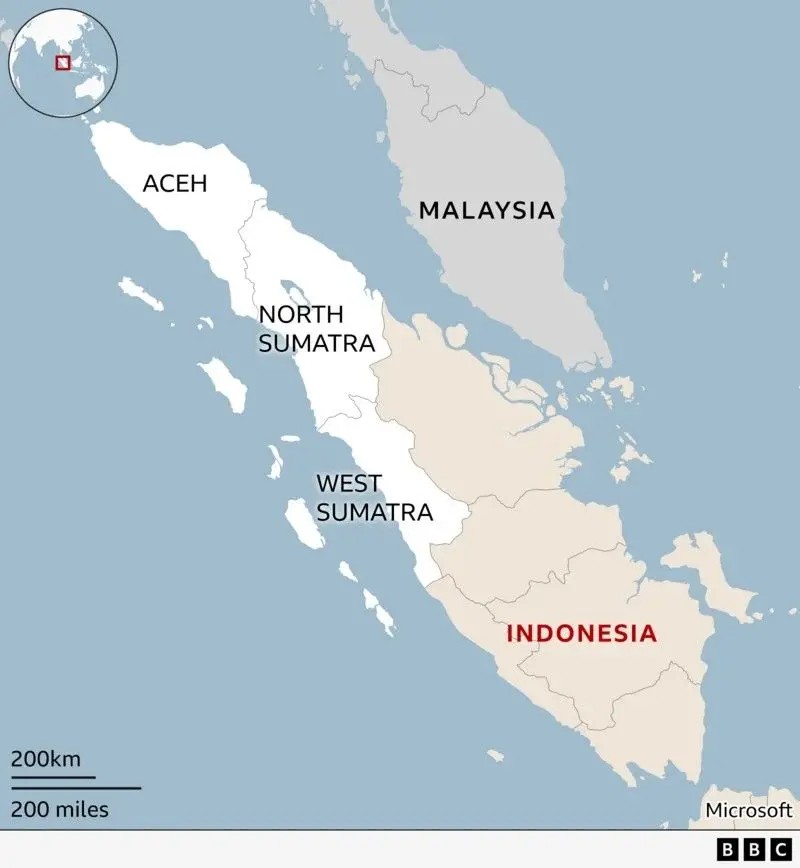
Report by Emmanuel Garjiek The death toll from last week’s devastating floods in Indonesia has risen to more than 500, with rescue teams still struggling to reach isolated communities across three worst-hit provinces.Authorities say the floods were triggered by a rare cyclone that formed over the Malacca Strait, unleashing torrential rains across Aceh, North Sumatra and West Sumatra.
The National Disaster Agency reports that about 1.4 million people have been affected, while 500 others remain missing and thousands are injured.Residents in several districts remain cut off as washed-out bridges, thick mud and debris continue to block major roads.
Emergency workers have resorted to travelling on foot and by motorcycle to deliver aid.Arini Amalia, a resident of Pidie Jaya in Aceh, described the floodwaters as “like a tsunami,” adding that older members of her family had never seen such destruction in their lifetime.Images from the region show entire roads submerged in mud, collapsed houses, uprooted trees and vehicles swept aside. At the Twin Bridges landmark in West Sumatra, Mariana, who is searching for her missing relatives, watched as excavators dug through thick layers of mud.
“I keep wondering what condition they will be found in,” she said.Desperate Need for AidMany survivors have gone without food for days. In Central Tapanuli, North Sumatra, residents say dwindling supplies are causing panic.
“Even instant noodles are being fought over,” one woman told the BBC, adding that access to clean water and communication remains limited.In parts of Central Aceh, residents queued for hours to use Starlink devices set up by local authorities in hopes of contacting relatives or charging phones.
Government Criticised Over Response Frustration has been growing over the pace of the government’s response, with critics accusing authorities of poor preparation and slow distribution of essential supplies.
President Prabowo Subianto, who visited affected areas in North Sumatra on Monday, acknowledged that some roads remain inaccessible but insisted that the government is “doing everything we can.”
“We face this disaster with resilience and solidarity,” he said.Regional Impact and Weather FactorsAcross South and Southeast Asia, nearly 1,100 people have been killed in a week of severe flooding and landslides.
Sri Lanka has reported 355 deaths, while Thailand’s toll stands at 176.Meteorologists say no single weather event is responsible.
Instead, a combination of the northeast monsoon and two cyclonic storms — Ditwah and Senyar — intensified rainfall across the region.
Cyclone Senyar was particularly rare, having formed unusually close to the equator.Experts warn that climate change is likely increasing the severity of storms, with heavier rainfall contributing to more destructive floods.







 Arop
Arop