Arop
Arop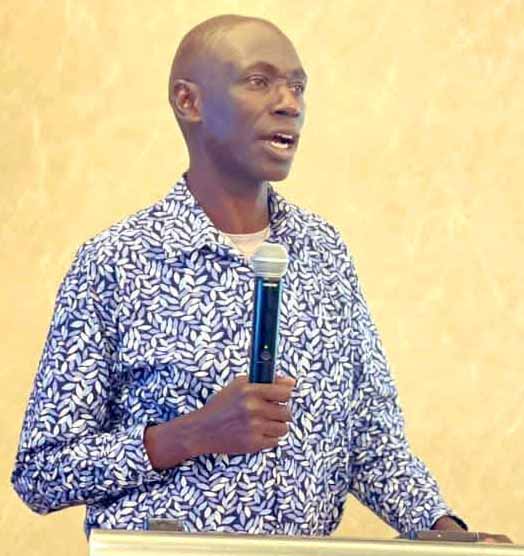
Juba – Al-Wadi Newspaper
By: Atem Garang
In a strongly worded statement, civil society activists in South Sudan have urged the country’s political leadership to resume dialogue and fully commit to the Revitalized Peace Agreement of 2018, amid ongoing political tensions and growing uncertainty.
This call comes at a time when violations of the ceasefire between the Sudan People’s Liberation Army (SPLA) and allied militias on one side, and the Sudan People’s Liberation Movement/Army-In Opposition (SPLM/A-IO) led by First Vice President Dr. Riek Machar on the other, continue to escalate. Dr. Machar has reportedly been under de facto house arrest imposed by President Salva Kiir since late March.
Speaking on Radio Tamazuj’s “Path to Democracy” program over the weekend, Edmund Yakani, Executive Director of CEPO (Community Empowerment for Progress Organization), stated that the country is at a critical crossroads.
“The roadmap was extended to allow for key electoral and security reforms. However, the first months of the extended transitional period have passed without any tangible progress — a deeply worrying sign,” Yakani said.
He further emphasized that current developments are “far removed from the provisions of the roadmap,” pointing to the lack of civic education and electoral awareness campaigns as examples of unmet obligations.
Yakani called for urgent action on security sector reforms, the creation of free civic and political space, and the allocation of financial resources for pending transitional tasks, stressing that these steps require genuine political will.
Expressing concern over the continued detention of opposition leaders, Yakani called for their immediate release as a step toward building trust.
“The threats to democratic transition persist due to the ongoing detention of opposition leaders, which is casting a shadow over the integrity of the upcoming elections,” he stated.
Yakani warned that the public perception of unfair or manipulated elections would be reinforced by such detentions, which may be used to ensure favorable outcomes for the ruling elites.
“This lack of trust can be corrected by releasing all political detainees,” he added.
He also highlighted that the National Legislative Assembly’s inactivity and the lack of government quorum for over three months have negatively impacted the functionality of governance, especially in relation to election preparations.
The statement from civil society adds to growing pressure on South Sudanese leaders to de-escalate tensions and recommit to a peaceful, democratic transition.


 Admin
Admin