Arop
Arop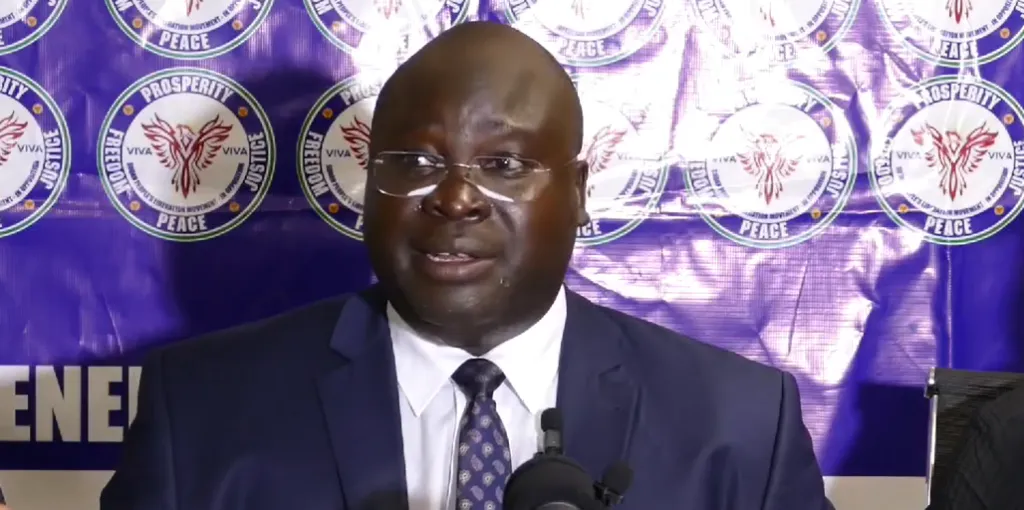
✍️ By: Alnaeim Mubarak Kuol
As South Sudan’s Transitional National Legislative Assembly reopened today after months of political paralysis, the atmosphere was far from celebratory. Instead, the parliamentary chamber became a stage for an open political showdown—not between traditional rivals, but among members of the same movement: the Sudan People’s Liberation Movement-in-Opposition (SPLM-IO).
This Assembly, formed under the revitalized peace agreement, brings together former adversaries. Yet, years after the signing of that fragile accord, the country finds itself at the brink of yet another crisis that threatens to unravel the already fragile peace.
At the heart of this growing tension stands Nathaniel Oyet Pierino, the First Deputy Speaker of the Assembly and Deputy Chair of SPLM-IO. Currently living in exile, Oyet is facing mounting and increasingly overt pressure to step down from his position. Behind the scenes, an internal faction within the movement—led by Stephen Par Kuol and Magok Makuer, a former Deputy Minister of Finance—is pushing for his replacement with a more “compliant and loyal” figure aligned with this emergent shadow leadership.
Meanwhile, Dr. Riek Machar, the SPLM-IO leader and First Vice President of the Republic, remains under effective house arrest in Juba—a grim indication of the crumbling political trust that once anchored the peace deal. The leadership vacuum, combined with a fractured internal structure, is exposing deep divisions within SPLM-IO’s ranks.
From exile, Oyet has not remained silent. Traveling across East African capitals, he has taken to social media to voice his rejection of what he calls a “soft coup” against the legitimate leadership of the movement. He has flatly rejected the designation of Stephen Par Kuol as “interim chairman,” branding it as a plot to dismantle the party from within.
In response, the breakaway faction has labeled Oyet a digital troublemaker, accusing him of undermining national stability through what they term “electronic agitation.” Meanwhile, SPLM-IO forces are being accused of coordinating with the notorious “White Army” militia in destabilizing regions of Upper Nile state—accusations that further complicate the security landscape.
The outlook is troubling. Between a government that isolates its key peace partner, an opposition movement torn from within, and a legislature operating amid leadership disputes and public distrust, the peace agreement now seems to be without true guardians.
And the question remains: Will this internal conflict within SPLM-IO topple its historic figures? Will Oyet be remembered as a political casualty—or as a symbol of a new era where opposition battles are waged not with bullets, but with chairs and constitutions?
Time will tell. But for now, exile seems safer than office—and tweets, it seems, speak louder than votes on the parliament floor.


 Admin
Admin