Admin
Admin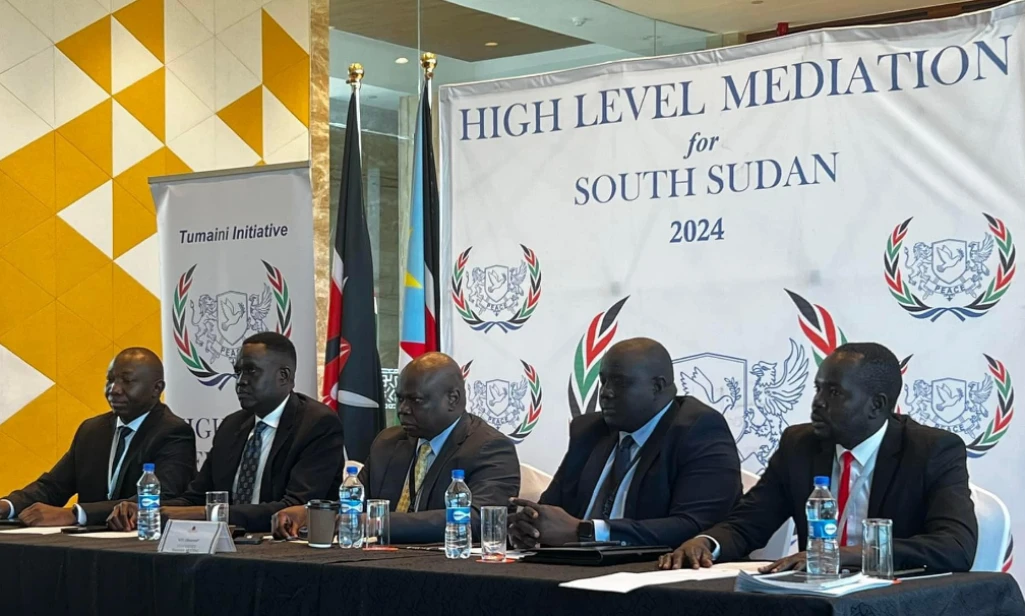
Report: Al-Naeim Mubarak Kuol
The South Sudan government delegation participating in the Tumaini peace talks in Nairobi, Kenya, stated that the negotiations have not collapsed but will resume in January next year. The delegation has returned to Juba for further consultations on the final provisions under negotiation and aligning them with the Revitalized Peace Agreement (R-ARCSS).
According to Radio Tamazuj, the new negotiation framework states: “For this purpose, the parties and stakeholders agree that the Tumaini Protocols and the R-ARCSS are complementary. In this regard, the protocols shall reinforce the provisions of the R-ARCSS by filling gaps and strengthening implementation mechanisms and institutions so they are empowered and adequately resourced.” It added: “The complement to the Tumaini Protocols seeks to enhance political goodwill to create momentum for timely and effective implementation of the agreement and to share responsibilities through integrating the opposition into the Revitalized Transitional Government of National Unity (R-TGoNU) and incorporating women, youth, and persons with special needs in the implementation mechanisms, in line with the principles of inclusivity and diversity.”
The framework continues: “The parties and stakeholders agree on the need to accelerate the pace of implementing the R-ARCSS and agree to establish a National High-Level Leadership Council (NHLC), which will report to the Presidency and be part of the extended Presidency on matters related to the implementation of the agreement.”
The parties will negotiate the composition, roles, and responsibilities of the NHLC, along with its Chair and Vice Chair. The NHLC will establish a National Implementation and Oversight Commission (NIOC) as a secretariat, with the condition that its Chair will not come from the same party that chairs the NHLC.
The proposed framework further states: “The parties must collectively identify any areas of divergence between the Tumaini Protocols and the R-ARCSS to harmonize their complementarity. Upon signing, the Tumaini Complement will transition to IGAD.”
Thereafter, IGAD, the Tumaini Initiative, Sant’Egidio, and external guarantors and partners will oversee the implementation of all measures, processes, and activities in the Tumaini Complement to R-ARCSS, striving to provide sustainable regional and international political, diplomatic support, and the necessary resources for implementation.
The Presidents of the Republics of Kenya and South Sudan will decide the date for the formal signing of the final agreement.
In light of these provisions in the new negotiation framework, the delegation of the Revitalized Transitional Government of National Unity saw the need to return to Juba for consultations on the protocols and how to proceed towards achieving a final peace agreement and stability in South Sudan.