Admin
Admin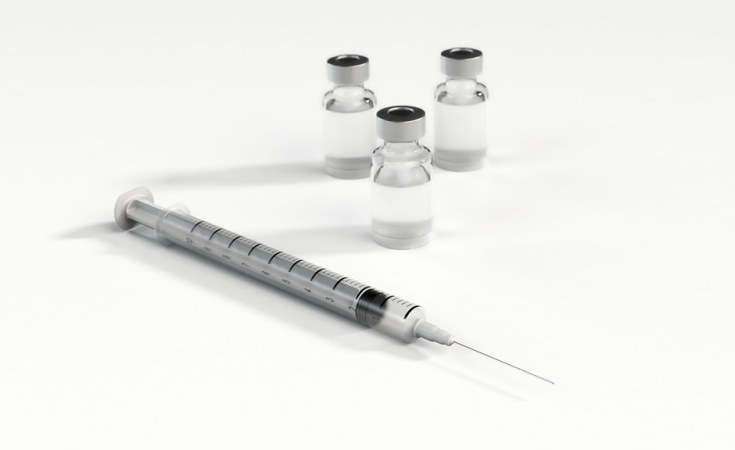
NEWS AGENCIES
Reports in Rwanda have revealed that the prevalence of HIV among Rwandans aged 15 to 64 is 3%.
The Rwanda Biomedical Centre (RBC) will introduce an injectable drug for the prevention of HIV and AIDS by the end of this month.
The drugs known as pre-exposure prophylaxis (PrEP) are a type of medication used to prevent HIV infection. The term PrEP refers to the use of antiretroviral drugs by individuals who do not carry the virus to reduce the risk of contracting HIV.
The drug Rwanda plans to introduce is long-acting cabotegravir (CAB-LA), a form of medication administered via intramuscular injection. The first two injections are given four weeks apart, followed by an injection every eight weeks.
Dr. Basile Ikuzo, Director of the HIV Prevention Unit at RBC, pointed out that all health centers and hospitals in the country offer HIV prevention services free of charge. Additionally, he mentioned that some private health centers also provide these services at no cost.
In an interview with The New Times, Dr. Ikuzo explained that CAB-LA will first be introduced on an experimental basis at two health centers in the country. After this pilot phase, it may be scaled up nationwide.
As the government prepares for the rollout of this drug, the World Health Organization (WHO) released new guidelines in 2022 for the use of CAB-LA as pre-exposure prophylaxis (PrEP) for HIV. The organization encouraged countries to consider “this safe and highly effective prevention option for people at substantial risk of HIV infection.”
The guidelines aim to support countries planning to introduce CAB-LA as part of a comprehensive approach to HIV prevention and to facilitate urgently needed operational research.
Dr. Meg Doherty, Director of WHO’s HIV, Hepatitis, and Sexually Transmitted Infections Programmes, stated, “Long-acting cabotegravir is a safe and highly effective HIV prevention tool but isn’t yet available outside study settings.”
Dr. Ikuzo said, “We have observed challenges with adherence to oral PrEP, and we believe injectable PrEP could be a solution.” He added, “We plan to start piloting it at two health centers to assess client acceptability and determine if it can be used as a new intervention. If the acceptability rate is high, we will scale it up across the country.”
With CAB-LA, individuals take a single dose every two months, shifting from the need for daily pills to a bi-monthly injection.
PrEP typically targets high-risk groups, such as sex workers and discordant couples. Dr. Ikuzo told The New Times that CAB-LA will be rolled out in December 2024 or January 2025.
The country already has the doses available, and trained teams to administer the injections are in place.
The injections will be administered at health centers, with clients returning every two months for subsequent doses.
Oral PrEP has been used for years in Rwanda, and currently, at least 30% of individuals in high-risk categories are using the medication. In total, over 10,000 people in Rwanda use PrEP.
According to Dr. Ikuzo, these measures have contributed to a decline in new infections and HIV prevalence among high-risk groups. For instance, the prevalence among female sex workers has dropped from 45% about a decade ago to 35% currently.
There were 1.3 million new HIV infections globally in 2023.
The Rwanda Population-based HIV Impact Assessment (RPHIA), a nationwide survey conducted in 2019, showed that the prevalence of HIV among Rwandans aged 15-64 is 3%.
The WHO targets that by 2025, 95% of all people living with HIV should have a diagnosis, 95% of them should be receiving life-saving antiretroviral treatment (ART), and 95% of people living with HIV on treatment should achieve a suppressed viral load for their health and to reduce onward HIV transmission.
Rwanda is one of the countries that has made significant achievements in managing HIV/AIDS, having reached the “95-95-95” target set by the Joint United Nations Programme on HIV/AIDS (UNAIDS).