Admin
Admin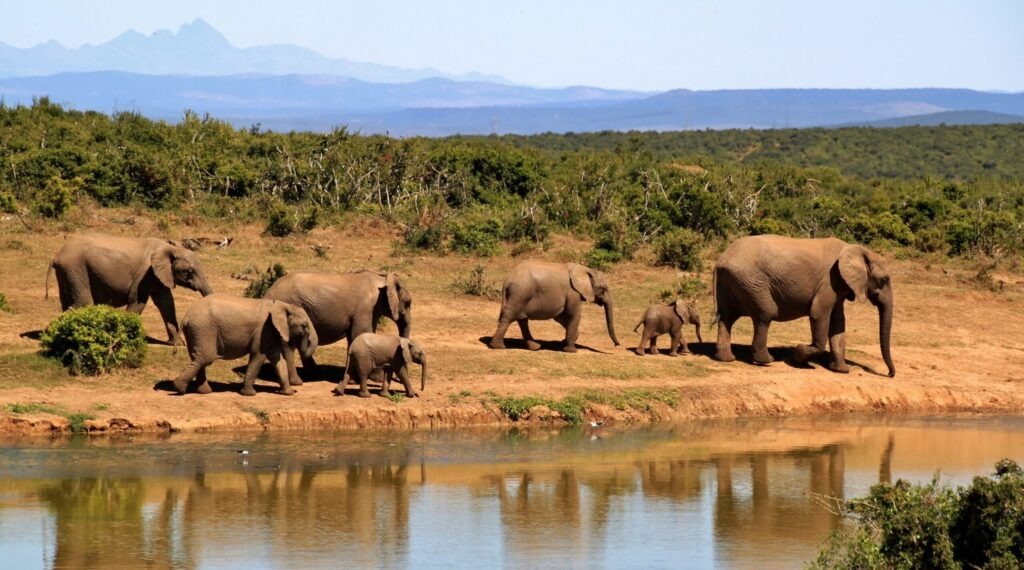
by Emmanuel Garjiek
In Jonglei and Greater Pibor, residents say no map is needed to understand migration patterns, only lived experience. When herds arrive, farming pauses, movement slows, and communities adjust to the passage of millions of antelope moving across South Sudan’s eastern plains.
As roads and development projects expand into these remote areas, residents and conservationists warn of a difficult question: how to build a future for people without disrupting ancient wildlife routes.
Millions of antelope continue to move along historic migration corridors stretching across Jonglei and Greater Pibor toward the Ethiopian borderlands. Conservationists describe the movement, involving an estimated six million white-eared kob, tiang, and other species, as the largest terrestrial mammal migration in the world.
A workshop in Pibor this week, organised by African Parks, brought together government officials, lawmakers, community leaders, and conservation actors to discuss how infrastructure development can proceed without disrupting wildlife pathways.
“We do not want a competition between development and conservation efforts,” said Florentin Aseervatham, Country Representative of African Parks in South Sudan. “Both should go hand in hand.”
South Sudan is under pressure to expand road networks to connect remote communities to markets, schools, and health services. Many areas remain isolated for months during the rainy season, when flooding cuts off entire regions. Conservationists caution that poorly planned infrastructure risks fragmenting migration routes that have existed for generations.
Aseervatham stressed: “Road developments are very important. But they should include environmental impact assessments and bring all actors into the design process.”
Peter Daniel, Project Manager for Jonglei State at African Parks, said communities must be central to land use planning. “We believe communities, wildlife, development and infrastructure must co-exist,” he said. He noted that migration corridors extend beyond protected areas into communal land, meaning conservation efforts cannot be limited to national parks. “These are corridors for wildlife migration. Communities need to understand how to preserve and co-exist with wildlife.”
On the ground, however, pressure on wildlife is increasing. Youth leaders say poverty and food insecurity are driving hunting across parts of the region. “People are doing a lot of poaching because of poverty and hunger,” said Ballack Willion, Chairperson of the GPAA Youth Union. “Their livelihoods are relying on hunting wildlife.”
He added that many communities remain unaware of the long-term economic benefits of conservation. “They do not know that wildlife can bring job opportunities and income.”
Migrating herds also bring conflict as animals pass through farmland and grazing areas, damaging crops and displacing livestock. Officials say these pressures are compounded by the emergence of commercial poaching networks.
“This is not an issue African Parks can handle alone,” Daniel said. “It requires collective effort from all stakeholders.”
The Deputy Chief Administrator of the Greater Pibor Administrative Area warned that poaching networks are increasingly operating across borders. “There are some people from the Ethiopian side who come for commercial purposes,” he said, calling for coordinated action between the two countries. “We need to open the corridor where wildlife can move freely.”
He cautioned that species are already disappearing from parts of their historic range. “There are some animals now disappearing,” he said, adding that elephants and giraffes could follow if hunting continues unchecked.
Despite these pressures, local authorities say customary governance systems are beginning to support conservation. In some areas, traditional leaders have introduced rules restricting hunting, including bans on the use of automatic weapons. “If you kill more wildlife, the law will punish you,” the deputy administrator said.
Conservationists believe such community-based systems may be crucial in areas where formal state presence remains limited. As South Sudan advances plans for new infrastructure corridors, officials face a narrowing window to integrate conservation into national development planning.
The decisions made on road placement, land use, and community engagement could determine whether one of the world’s largest migrations continues to move freely across the landscape. For now, the herds still move. But the race to protect their corridors is already underway.