Admin
Admin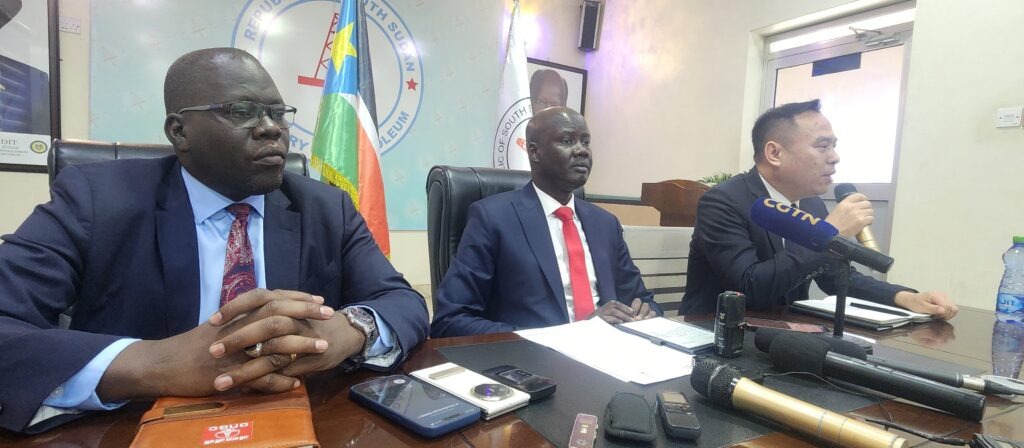
By Emmanuel Garjiek
South Sudan’s Ministry of Petroleum has announced plans to increase oil production as global prices climb above USD 100 per barrel, presenting a rare opportunity for the country to strengthen its fragile economy.
Speaking at a press conference in Juba, Chol Deng Thon, Undersecretary of the Ministry of Petroleum, said the government is working closely with joint operating companies to expand output despite logistical challenges caused by maritime disruptions linked to conflicts in the Middle East.
“We are cognizant about the logistical challenges facing global maritime routes caused by ongoing conflicts in the Middle East, but we are pushing forward with increasing production,” Chol stated.
Production Gains in Upper Nile
The ministry highlighted progress in the Al Nahal field in Blocks 3 and 7, Upper Nile State, where new drilling has unlocked significant reserves. One well, Al Nahal W8, is producing about 5,440 barrels per day with minimal water content, far exceeding regional averages.
This success has helped raise national output from around 95,000 to 100,000 barrels per day, flowing through the export pipeline. Officials expect further increases as exploration and drilling campaigns continue.
Revenue Allocation and Challenges
Chol noted that not all oil revenues go directly to the government. Portions are allocated to operational costs, transit and processing fees paid to Sudan, and community entitlements, including two percent for oil-producing states and one percent for future generations. Despite these deductions, he expressed optimism that higher production will translate into improved revenues and economic benefits.
International Partnerships
The ministry commended its partners—including China National Petroleum Corporation, Oil and Natural Gas Corporation, and Nile Petroleum Corporation—for their continued investment and technical support. China remains South Sudan’s primary buyer, with exports largely routed through the Bab al-Mandab Strait to Asian markets, minimizing exposure to disruptions around the Strait of Hormuz.
Dr. Ling Zongfa, President of Dar Petroleum Operating Company, confirmed that 16 wells have been drilled since October, with 12 already commissioned. He said production has exceeded forecasts thanks to improved reservoir management and new technologies.
Outlook
Despite regional instability and global shipping challenges, South Sudan’s oil sector is showing signs of resilience. With continued investment and exploration, officials believe production can rise further, offering a much-needed boost to national revenues in a country still grappling with political and humanitarian crises.


 Arop
Arop