Admin
Admin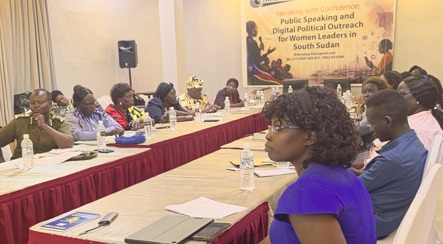
Reported by Emmanuel Garjiek
Women leaders, journalists, and lawmakers in South Sudan have raised alarm over rising online harassment, cyberbullying, and AI-driven misinformation, warning that these threats could undermine women’s political participation ahead of the December 2026 elections.
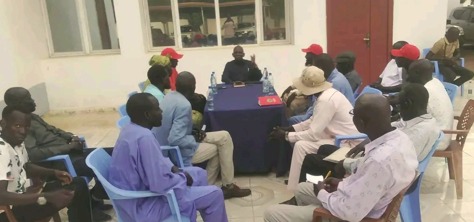
The concerns were voiced during a two-day workshop in Juba on communication, public speaking, and digital outreach, organized by the Female Journalists Network (FJN) with support from the United Nations Mission in South Sudan (UNMISS).
Oliver Mori, spokesperson of South Sudan’s National Assembly, said digital platforms were increasingly shaping political debate but also exposing women to abuse. “Public opinion is shaped online. Policies are debated online. Campaigns are mobilised online,” he noted. “But while the digital space has opened opportunities, it has also introduced challenges, especially for women.” Mori cited harassment, hate speech, and targeted intimidation, adding that parliament had passed the Cybercrimes and Computer Misuse Act to address online abuse. “The Act was designed not to suppress freedom of expression, as some may speculate, but to create responsibility, accountability and protection within the digital space,” he said.
Information Minister Ateny Wek Ateny warned of manipulated images and videos being used to spread misinformation. “Artificial intelligence (AI) is used for medicine, agriculture, education, and innovation,” he said. “Now it is being used to destroy families here in South Sudan.” He described cases where women’s images were allegedly altered and inserted into pornographic material, stressing that low literacy levels made communities vulnerable. “Our people are only 34 percent literate. The majority can easily believe manipulated content,” he said, urging women journalists to educate communities about misinformation.
Elizabeth Pita Lugor, Central Equatoria State Minister of Gender and Social Welfare, highlighted cultural barriers. “When a man talks powerfully, it is accepted, but if a woman speaks strongly, there are double standards,” she said, noting that stereotypes often undermine women’s confidence in public communication.
Dr. Musa Yerro, representing UNMISS, emphasized that women’s participation was vital to South Sudan’s peace process. “The 35 percent quota is not just a political commitment,” he said. “It is a recognition that peace, democracy, and prosperity are not possible without women’s full and equal participation.”
Leila Osman of the Female Journalists Network said women journalists continue to work under difficult conditions. “Through this workshop, we aim to strengthen women’s communication skills and visibility so that their voices can be heard clearly and effectively,” she said.
Participants agreed that empowering women to engage safely online will be essential as political campaigning and civic debate increasingly move into digital spaces ahead of next year’s elections.